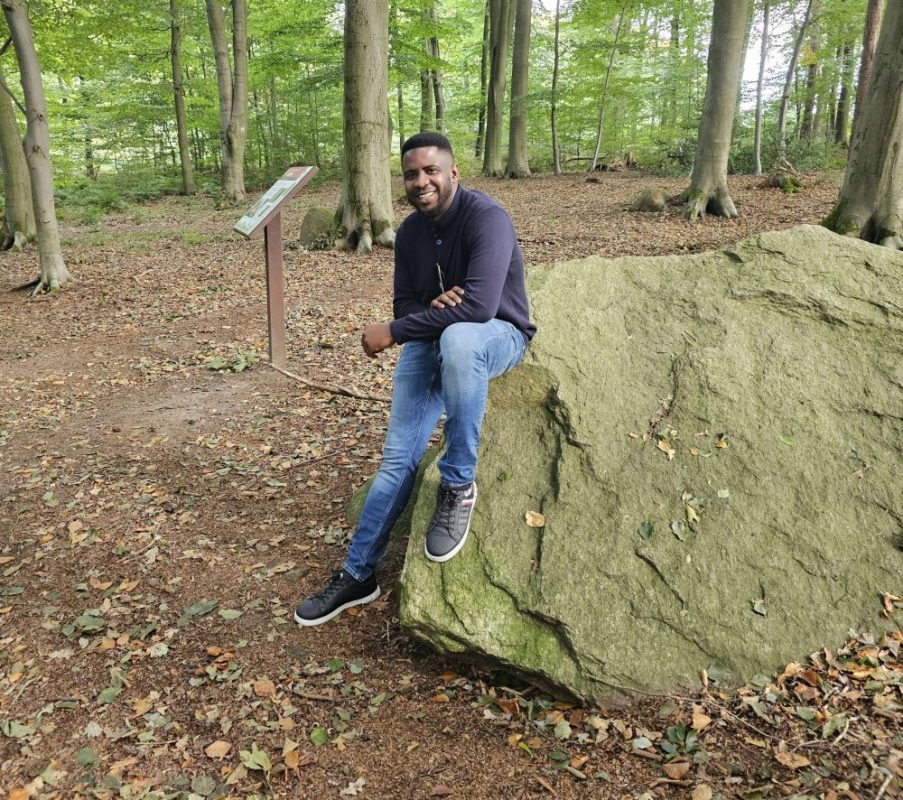
The seasons of the year seem to understand time segments more than many humans ever will.
Despite climate change, which now causes the seasons to interfere with each other oftentimes, they never lose their internal order. Nevertheless, the seasons do not struggle to outperform themselves like humans do.
Before delving deeper, stepping back to look at the cosmic boundary separating season from time is crucial for the true understanding of this narrative.
The Boundary Between Season and Time
Season: A distinct period of the year defined by regular weather changes and specific human activities, ranging from agriculture and sports to cultural festivals. A season determines exactly what will manifest at a particular moment.
This makes the two common idioms beautifully substitutable: “Everything happens in its time,” and “Everything happens in its season.”
Much as the phrase “everything happens in its time” remains universally in use, my narrative makes “everything happens in its season” far more appropriate. Hierarchically, time determines the season, and never the other way around. Because time dictates the physical movement that forces atmospheric change, the season is simply where time’s invisible authority becomes visible to us.
Time: The continuous, unstoppable progression of existence moving from the past through the present and into the future. It moves only forward because disorder, known in physics as entropy, always increases in our universe.
In his theory of relativity, Albert Einstein showed that time is not absolute. It stretches and shifts depending on your speed and gravity, meaning fast movement or a strong gravitational field makes time pass more slowly. While physics treats time as the fourth dimension ordering events in spacetime, it remains the ultimate anchor of reality.
The Seasons of the Year are Time Segments
Seasons are cyclical weather patterns caused by the physical motion of the Earth as it travels through space over time, making natural activities happen at a particular, suitable season in the year.
Rainy season, dry season, winter, spring, summer, and autumn describe distinct periods of atmospheric conditions.
Time is a continuous, universal dimension of existence, while a season is a specific, local atmospheric pattern that repeats periodically.
If we look at the unbroken chain of cause and effect in nature, it is highly proper to say that: “Time determines the atmospheric conditions, and the atmospheric conditions determine the season.”
The seasons understand time’s absolute authority over atmospheric conditions, and they try not to compete with it. Even when climate change enforces a temporary disruption, the weakness of a season whose atmospheric condition doesn’t align with the time is always visible.
A quick, beautiful example of this is when the sun is scorching at 35°C at the peak of summer, and then comes a sudden downpour. It never takes long before the rain drizzles and stops, allowing the Sun to reclaim its rightful place. The counterfeit condition cannot withstand the true time segment.
Humans Fail to Understand These Time Segments
Unlike the seasons, humans think superior of themselves to nature, positioning humanity at the top of a perceived biological and existential hierarchy. This enforces a rigid mindset, scientifically and philosophically known as anthropocentrism (human-centeredness).
No doubt, this human-centeredness helps in shaping how human civilization interacts with the world. It brings about rapid development, advancements in science and technology, and cultural evolution.
But oftentimes, the deep human need to compete, overshadow, or outdo one another remains simple proof that humans are not as intelligent as they think they are. Once again, they fail to understand time segments the way the seasons do.
A Change in Perspective
Today, many global occurrences heavily challenge this traditional view of human superiority. Cognitive science continues to prove that animals possess high intelligence, deep emotions, and complex culture.
At the same time, global challenges like climate change have taught humans that they are not superior to atmospheric conditions or ecological systems; they are entirely dependent on them.
This perspective further shows that humans’ effort and ability to implement goals that will later become an achievement could be totally dependent on an individual’s season of manifestation.
Perhaps, just like the atmospheric conditions of the weather which determine the year’s season, humans also have their individual seasons to thrive, but time remains the ultimate determining factor.
If the time says it is an individual’s season to study and understand a pattern, but that individual leaves learning the pattern behind to start competing with those who have already mastered it and are walking in it, failure is inevitable. Such an individual wouldn’t walk a long distance before realizing they are yet to master the baseline pattern.
Time Determines Different Seasons for Different People
Most of the time, many seem to be more time-conscious in the wrong way. They live with the constant fear of not meeting their life goals, struggling to catch up with other people’s timelines, and thereby losing sight of their own seasonal timing.
Consider time inside a season: to one farmer, time should be cultivation time, and to another, it should be harvest time. It entirely depends on what they cultivated in a particular season, and whose season it is to harvest.
People shouldn’t compare their lifetime goals with those of another.
You may be doing one thing because it is the specific season in your life goal calendar (if it aligns with the time), while I am doing another thing according to my own life goal calendar and season.
Outside the life goal calendar, when it is a person’s time of manifesting an achievement, personal growth, or development, nature has its way of enforcing an individual’s season by causing opportunities to present themselves.
It is the individual’s duty to be in readiness for their time by understanding their seasons and what is best to do at that particular period, just like a farmer who knows what is best to do at a particular season of the year.
An insightful person should be cautious of nature’s timing and know what to do in a particular season in accordance with one’s ambition and life goal calendar, regardless of what others are doing in that season.
There’s no need for unhealthy competition.
Even though the sky is big enough, a season whose atmospheric conditions are not in alignment with its time cannot thrive.
I wish my readers a September to remember positively. Happy New Month!
About The Author