At times, I wonder if born Germans actually appreciate what they have in a functional political system, but considering the struggle to maintain the standard, I have the conviction that they really do. Otherwise, humans would not have invested so much effort into building such a functional system in the first place.
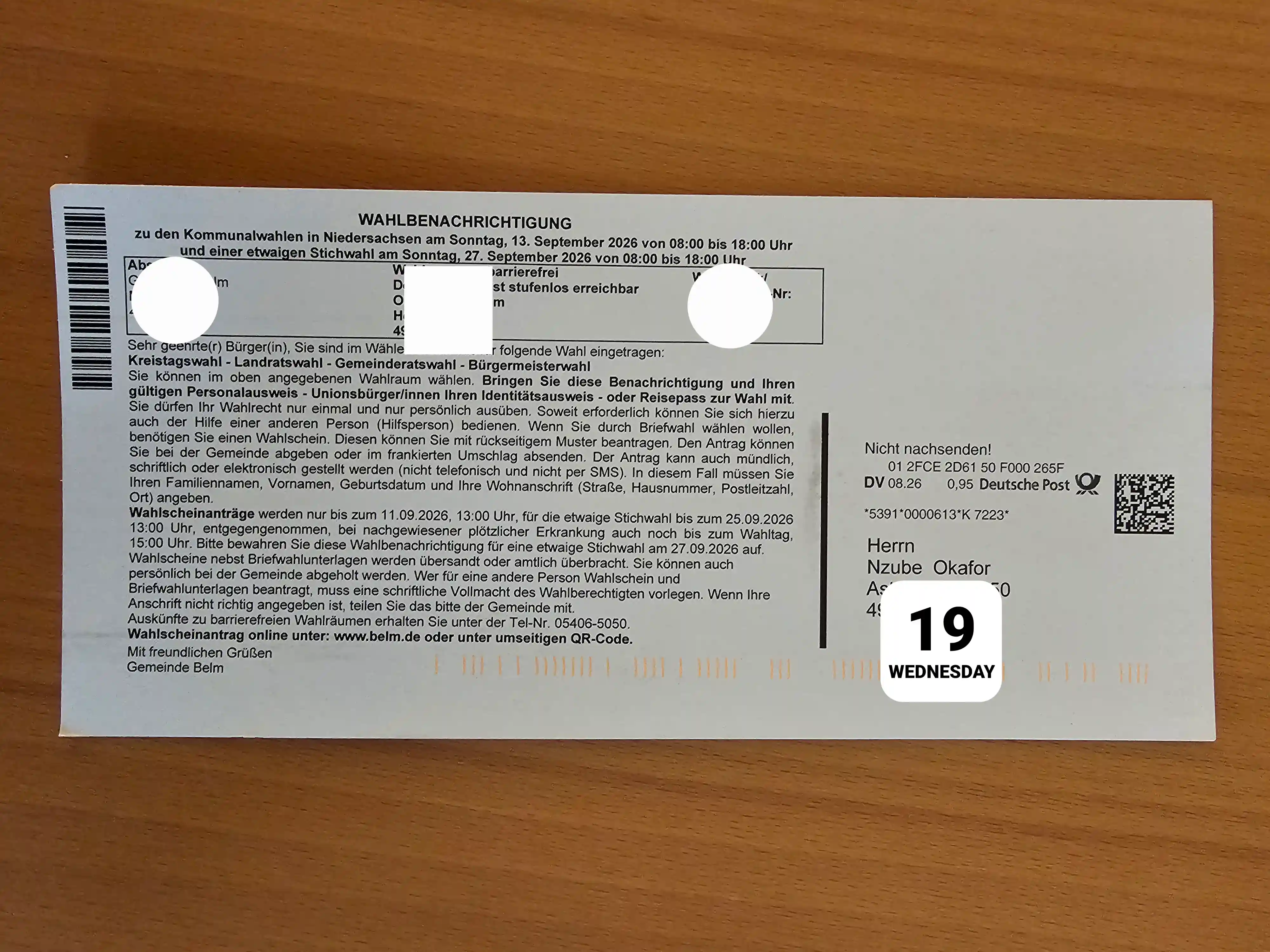
The document in my hands is a Wahlbenachrichtigung, which is an official voter notification card in use in Germany. It notifies an eligible citizen (in this case, in the municipality of Belm, where I live) of their registration to vote and details where and when they can cast their ballot.
I received mine via post, marking the very first time I will vote in an election outside my home country, Nigeria. It did more than just remind me that I am a German taxpayer; it went a step further to convince me that my voice actually counts in the causes that will determine the future of my immediate environment.
The Ballot and the Backlash
A few Germans who lack exposure choose extreme-right parties to show their anger. They think the country should drive away immigrants, no matter how well they integrate into society.
But what they fail to understand is that any country without foreign nationals will face immediate labour shortages and economic loss. Immigrants are the ones who frequently settle for menial jobs while fostering their studies or pursuing professional careers.
When you take into account that these individuals fill vital positions and actively contribute to the economy through taxes, it becomes apparent that political leadership is not the only cause of the problem in our world. Instead, common individuals who choose to think others are less human drive this global problem.
If we allow such unreasonable voices to outnumber the voice of reason, we’ll soon find ourselves in a country where the dark past would look small by comparison. I’m sure that is the last thing an average German wants to experience now, because 1933–1945 is a history that we should never allow to repeat itself.
On that note, it is clear that immigrants who have worked hard and integrated well enough to become bona fide citizens are not second-class citizens. They enjoy equal rights, share in systemic opportunities just like born citizens, and hold a powerful voice to defend their civic and civil rights at the ballot box.
A Tale of Two Systems
A truly functional electoral process, where the votes of the citizens actually choose their leaders without electoral manipulation, rigging, vote-buying, or disenfranchisement, is sadly hard to find in developing nations like Nigeria.
German political structures are as serious as their citizens. During election time, nobody takes it lightly. They know that just one vote can make or mar the whole system within four years. Therefore, everyone completely fixates on the manifestos and their favorite parties. I feel deeply privileged to hold equal rights and add my voice to this process.
This reality makes me wonder how my home country is preparing for the 2027 presidential election. The current social atmosphere back home suggests otherwise about how prepared Nigerians are to change the course of leadership.
Perhaps it has become an accepted norm that the people’s voices don’t count due to deep-seated manipulation, but such a daunting phenomenon shouldn’t rob us of the motivation it takes to promote our candidates and political parties.
It takes only one event to rewrite history. Who knows? We may get it right this time around, depending on how serious we go about it. To live in Germany is to admire the German electoral system and polity, and writing about it is my way of keeping people informed that it takes human dedication to fix a system.
Until we get it right politically, there’s no point in staying apolitical with the false thought that it reduces mental stress. The harsh consequences people encounter every four years from having the wrong candidate in power commit too many innocent souls to Mother Earth.
Take politics seriously, because it determines the future.
About The Author