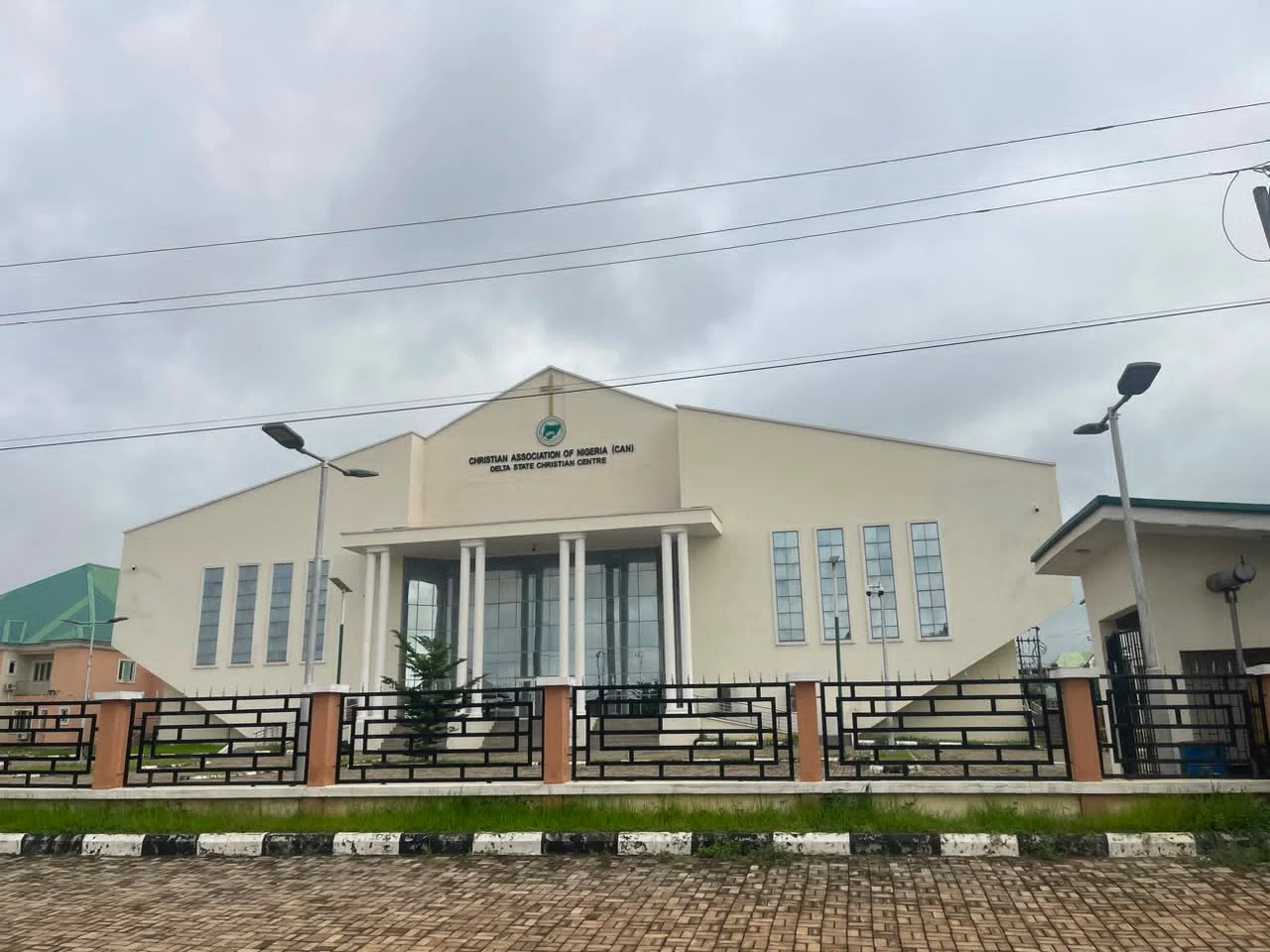
Growing up as a church girl, I heard a lot of sermons.
Sunday morning, Sunday evening, midweek service, youth meeting.
It felt like my entire childhood was soundtracked by the rhythmic cadence of the preacher’s voice, the hum of the organ, and the passionate choruses of the choir.
We lived in the sanctuary, and the sanctuary lived in us. The air was always thick with a heavy sense of expectation, punctuated by ecstatic shouts of victory and desperate, tearful surrenders at the altar.
Inside those sacred walls, the complex formulas for human life seemed incredibly uncomplicated. The struggles of poverty, career stagnation, and personal fulfillment were boiled down to concise, poetic commands:
“Believe and you shall receive.”
“Just have faith.”
“Say it and have it.”
My mother’s favourite book was “Say it and have it” She carried it everywhere. It was far more than a book to her; it was an indispensable manual for structural survival.
She carried it in her purse until the edges frayed, the corners curled, and the cover began to peel. She underlined its pages with a sharp red pen, prayed its words into the quiet, dark hours of the early morning, and believed it with her whole heart. And I believed it too, but we also know there is “no Faith without works”.
Because when you’re young, you don’t question the pulpit.
But only have to sit in the wooden pews with wide, trusting eyes, processing the entirety of human existence, through the spiritual lenses handed down to you by authority figures.
You think the men of God can’t lie. You truly believe that if you follow the three-step formula shouted from the stage, reality will instantly bend to your decree.
Hold on. Don’t conclude yet
Do not think this is an attack on the church, or a cynical walk away from spiritual roots. It is quite the opposite. This is a sober, deliberate journey toward the full, uncompromised weight of truth.
Because as I grew up, life started asking me questions that sermons never answered.
The comforting simplicity of childhood theology began to fracture when it collided with the raw, unpolished edges of adult reality.
The world outside the sanctuary did not operate on rhyming catchphrases or emotional crescendos. It ran on harsh economics, systemic structures, and silent, heavy pressures that did not dissolve simply because a closing hymn was sung.
The question was never, “Is it a crime to have faith?”
Of course not. Faith keeps people alive. It is the vital oxygen of the soul when the cultural or financial environment becomes toxic.
Faith got my mom through nights I didn’t understand, nights when the kitchen cupboards were bare, when malaria knocked at the door, or when silent anxieties kept her staring at the ceiling for hours.
Faith is beautiful. It is an indispensable anchor in a turbulent, unpredictable world.
The real question is: Does my faith do the work?
When the sanctuary doors close, the lights dim, and the music fades into total silence, what happens next when you step back onto the pavement?
Can my faith pay the bills when rent is due?
Be able to sort out my next meal when the fridge is empty and the pantry offers nothing but bare shelves?
Is my faith able to pay for my children’s school fees when the administrator sends home a final warning letter?
Will my faith get me out of debt when collectors are calling my phone three times a day?
Because what I have seen is this:
Our generation of Christians is banking on faith but never working to achieve a goal.
We have turned a profound spiritual principle into a cosmic lottery system. Praying for open doors but never knocking. Fasting for breakthroughs but never applying for jobs, writing CVs, or showing up at corporate offices to network.
Sowing seeds and waiting for massive harvests on land we never tilled, never cleared, and never protected from the elements.
And then we wonder why nothing is changing.
We sit in our stagnation, looking up at the sky, wondering if our lack of progress is a spiritual attack or a hidden test from God.
In reality, it is simply the natural, mathematical consequence of our own structural passivity. God runs the universe on laws, and one of the primary laws of the earth is seed, time, and harvest.
If you do not execute the time and the labor, the harvest is an illusion.
Let me be clear. I’m not saying God doesn’t provide. I’m not saying prayer doesn’t work. I have seen the supernatural pull people out of deep pits. I know the profound comfort of divine timing.
What I’m saying is: God blessed the work of your hands. He didn’t say he would bless the work of your excuses.
He explicitly promised to multiply what you actively bring to the table, not what you hide behind your back out of fear. If your hands are entirely empty of practical effort, then multiplication results in zero. Even divine multiplication requires a base number to work with.
Why do you think your next meal will come from God when you haven’t worked to purchase the meal?
Why do you think money will fall from heaven when you haven’t learned a skill, built a network, or created tangible value for another human being?
Money is simply a vehicle that tracks human value. If you provide no value to the marketplace, no transaction can take place, no matter how hard you pray or how loudly you shout your confessions.
Why do we expect miracles to do what discipline is supposed to do?
A miracle is a divine intervention for a situation that is utterly beyond human capacity. Discipline, however, is the daily, consistent execution of human responsibility. To ask God for a miraculous financial breakthrough to cover up our total lack of career discipline is not faith; it is an insult to the intellect and free will He gave us.
It’s time we woke up
It’s time we stopped using “I’m waiting on God” as a cover for “I’m too scared to start.”
It is incredibly convenient to wrap our fear of failure, our fear of rejection, and our fear of hard labor in protective religious vocabulary.
It sounds deeply spiritual to say, “I am waiting on a word from the Lord,” when the truth is we are simply terrified of launching the business, sitting for the professional exam, or risking the possibility of hearing the word “no.”
Passivity is comfortable; execution is terrifying.
It’s time we stopped calling laziness “faith.”
Spiritual paralysis is not a fruit of the Spirit. Sitting on the couch claiming a ancient promise while refusing to execute a modern strategy is a dangerous distortion of scripture.
It’s time we got connected to people who can help us in the direction we ought to go.
We need real, practical alignment with reality, not just emotional alignment with a sermon.
Mentors. Builders. People doing what you’re praying for. Sit with them. Learn from them. Serve them.
Value doesn’t just happen in a vacuum; it is caught through proximity, humility, and observation. Stop looking for simple hand-outs from people who have built wealth, and start looking for the strategic patterns in how they constructed their discipline.
Study their schedules. Emulate their focus. Understand their sacrifices.
Because faith opens your eyes, but work puts food in your mouth. Faith gives you the grand vision of the mountain peak, but labor is what physically moves your feet up the steep, rocky trail.
And can we talk about the seed thing for a second?
This is perhaps the biggest misunderstanding in modern church culture.
Every time a pastor says, “Drop a seed and see how God will multiply it,” we amen and rush to give.
Empty our pockets into the offering baskets, driven by a mixture of desperate hope, financial urgency, and emotional manipulation.
But nobody ever asks: How does God multiply His own?
If we look closely at the very nature God designed, how does He multiply his plants?
He waters. Waits. Works with seasons. Puts things in the ground and nurtures them through storms, droughts, and changing climates. God does not drop a fully formed oak tree from the clouds; But demands that a tiny seed undergo the painful, hidden process of breaking open under the dark dirt.
So if you are sowing, are you also watering? Are you protecting it from pests? Are you preparing the ground through market research, late-night studying, and operational legal structures? Or did you just drop money into a bucket and go home, expecting God to run a financial errand for you while you slept?
Faith is not magic. Faith is partnership.
It is a covenant agreement between the Divine and the human.
You do your part. God does His.
You show up. God shows off.
But you cannot ask Him to show off on an empty stage where you refused to build the platform.
I’m not bitter. I’m just tired of watching good people get stuck because they were taught half the truth.
It breaks my heart to see brilliant, well-meaning, deeply passionate believers trapped in perpetual cycles of poverty and systemic frustration because they were fed an incomplete gospel that emphasized spiritual mechanics while completely ignoring practical economics.
Tired of seeing people pray for 10 years for what 1 year of focused work could give them.
Ten years of weeping at altars for a financial open door, when twelve months of intense learning, software engineering, plumbing, project management, digital design, or sales copy, would have unlocked that exact financial door naturally through the laws of exchange.
Tired of seeing people broke in the name of “trusting God.”
God is a Father, and no loving father takes pride in seeing his children broke, dependent, and unable to manage their basic human dignity due to an intentional avoidance of labor.
So here’s my challenge to you, and to me:
Say it. Yes. Declare it with absolute confidence.
Believe it. Yes. Let it anchor your inner soul.
But then get up and work for it.
Do not stop at the confession stage. A confession without a consequence is empty air.
Learn the skill. Send the email. Start the business. Save the money. Build the relationship. Wake up an hour earlier. Stay up an hour later. Turn off the endless digital distractions.
Invest in your brain. Do the uncomfortable, gruelling, unglamorous work that happens when nobody is watching.
Stop relaxing and depending on faith alone.
The scripture is incredibly clear, yet we choose to read right past the most practical, sharp verse in the book of James.
Because faith without works is dead. And dead things don’t pay bills.
A corpse cannot sign a check. A lifeless faith cannot settle an commercial invoice. If your belief does not possess legs, it is nothing more than a ghost haunting your potential.
Say it and have it?
Yes.
But say it, work for it, and have it.
“Now get up and go to work”
That’s the gospel I wish someone told me earlier. That is the truth that sets men free, not just free from internal sin, but free from the paralyzing delusion that passive wishing can ever substitute for intentional, disciplined execution.
Get up, step out of the pews, pick up your tools, and build the life you have been praying for.
Sanctuary Reflection Questions:
- The Safe Cover: Looking back at your own journey, has there ever been a time when you used the phrase “I am waiting on God” to secretly mask a fear of launching out, failing, or being rejected?
- The Watered Seed: If your primary life goal right now is a spiritual “seed” you have sown, what practical action have you taken this week to “water” its soil through daily discipline or skill-building?
- The Mirror Test: James warns that faith without works is dead. If your current daily actions and work schedules were the only evidence of your beliefs, what story would they tell about your true goals?
- The Mentorship Gap: Who is currently sitting at the tables you are praying to reach? What is one practical way you can serve, learn from, or observe their patterns of execution this month?
About The Author